

Antique china hutches can do a lot more than hold dishes. It can anchor a dining room, add storage to a hallway, bring warmth to a living space, or turn an empty wall into something that feels collected and intentional. Even if you do not own fine china, a good hutch still has plenty of use today.
That is part of what makes these pieces so appealing.
They bring storage, display space, and architectural presence into a room all at once. And because older hutches often have better wood, more thoughtful details, and stronger visual character than many newer display cabinets, they can change the feel of a space very quickly.
But not every old cabinet is worth bringing home.
Some pieces are beautiful but impractical for modern rooms. Others have condition issues that are easy to miss at first glance. And because hutches come in so many styles, sizes, and quality levels, it helps to know what you are looking at before you commit.
If you are thinking about adding one to your home, this guide covers how to identify antique china hutches, how to style it so it feels relevant now, and what to check before you buy. If you are still comparing storage pieces, understanding the difference between a china cabinet and a hutch can also help you choose the right piece for your space.
What Is an Antique China Hutch?
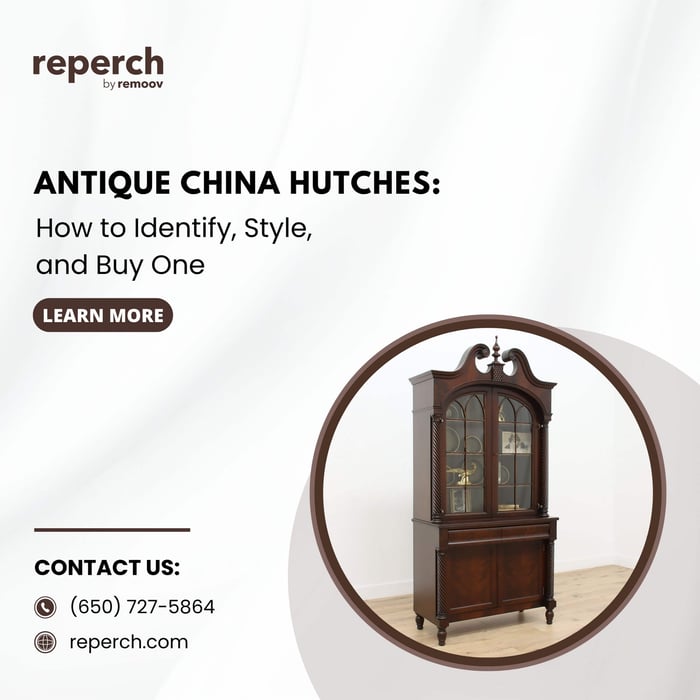
A china hutch is a storage and display piece that usually combines two functions. The upper section is often designed for display, with glass doors, open shelving, or mirrored backing. The lower section typically offers closed storage through drawers, cabinets, or solid doors.
Traditionally, these pieces were used to display fine china, glassware, serving pieces, and other household treasures. They were also practical, giving families a place to store linens, tableware, and seasonal items that were not used every day.
When the piece is truly antique, it is generally at least 100 years old. That usually means it dates to the early twentieth century or earlier. You will also find many vintage hutches that are younger than that but still have strong character and quality. Both can be worth considering, but if you are specifically shopping for antique furniture, age matters.
Why Antique China Hutches Still Work Today
Even though most homes no longer revolve around formal china displays, antique hutches still fit beautifully into modern life.
The reason is simple. They are useful.
A good antique hutch gives you vertical storage without feeling as flat or generic as a standard cabinet. It lets you hide some things, display others, and create a focal point in the process. In a dining room, that may still mean dishes and glassware. In a living room, it could mean books, art objects, baskets, and collected decor. In a hallway, it might become a linen cabinet, bar setup, or storage piece with more personality than built-ins.
They also bring visual depth.
Many newer storage pieces are clean and functional, but they do not always add much warmth. An older hutch often does. The wood, hardware, glass, and proportions all help the room feel more layered.
How to Identify an Antique China Hutch
If you are shopping secondhand, identification starts with a few basic things: material, construction, style, and signs of age. It also helps to know how to evaluate quality in secondhand furniture before you judge a piece by appearance alone.
Start With the Materials
Most antique china hutches were made from hardwoods or high-quality veneers over strong secondary woods. Common woods include oak, mahogany, walnut, cherry, maple, and rosewood.
Older pieces often feel substantial. The wood usually has more depth in color and grain than lower-cost modern reproductions. You may also notice a mellow finish, surface variation, or patina that comes from age rather than factory distressing.
Glass is another clue. Many older hutches feature original glass panels, which may have slight waviness, imperfections, or a character that feels different from modern replacement glass. Some hutches also have mirrored backs to reflect light and show off displayed pieces.
Look at the Construction
Construction tells you a lot about both quality and age.
Check the drawers, cabinet interiors, and underside if possible. Older hutches often show dovetail joinery in the drawers, solid back panels, and thoughtful interior construction. The piece should feel sturdy, not flimsy.
Handmade details can also help. Slight irregularities in carving, joinery, or finish often point to age and handwork. Perfect uniformity can sometimes suggest a later machine-made reproduction.
The hardware matters too. Hinges, locks, pulls, and escutcheons may give clues about the period. Original hardware is a plus when it fits the piece well and functions properly.
Notice the Style
Style can help place a hutch in a broader historical context. You do not need to be an expert in every furniture period, but recognizing the overall feel of a piece can help.
Some hutches are simple and architectural. Others are ornate and decorative. The lines, feet, crown shape, carving, and door design all point toward different periods and influences.
You might come across styles such as:
Victorian, with more ornament, carving, and visual weight
Queen Anne, with graceful curves and cabriole legs
Chippendale-inspired, often featuring detailed woodwork and traditional elegance
Sheraton or Hepplewhite influences, which usually feel lighter and more refined
Mission or Arts and Crafts, with straighter lines and simpler construction
French or Swedish styles, which may feel softer, painted, or more decorative in different ways
You do not need to name the exact style to shop well, but it helps to understand whether the piece feels formal, rustic, minimal, or decorative, because that affects how easy it will be to style.
Watch for Signs of Real Age
A genuine antique usually shows some honest wear.
That might include softened finish, minor edge wear, subtle scratches, oxidation on hardware, or slight variation in wood tone. These things often add appeal rather than take it away.
What you want to avoid is damage disguised as character. Cracks, major veneer loss, water damage, unstable shelving, or poor repairs are not the same thing as patina.
A good antique piece should look lived with, not worn out.
Popular Antique China Hutch Styles
Knowing the major style categories can make shopping easier, especially if you already have a sense of your home’s look.
Victorian Hutches
Victorian hutches tend to be more ornate and decorative. You may see carved details, darker woods, curved glass, and heavier silhouettes. These pieces can be beautiful, but they often need enough room around them to breathe.
If the rest of the room is already visually busy, a highly ornate Victorian hutch can feel like too much. In a simpler room, though, it can become a strong focal point.
Queen Anne and Traditional English Styles
These styles usually feel elegant and balanced. Expect graceful proportions, curved legs, and a more refined traditional look. These hutches often work well in dining rooms and formal spaces, but they can also look beautiful in homes that mix old and new.
French and Swedish Hutches
These often feel a little lighter and softer. Some are painted, some feature delicate detailing, and many have a less imposing look than darker English styles. If you want an antique hutch that does not feel too heavy, these can be especially appealing.
Mission and Arts and Crafts Hutches
These are usually simpler and more architectural, with straight lines, honest construction, and less ornament. They can fit especially well in homes that lean understated, warm, and practical.
Because the design is restrained, these hutches often mix into more modern interiors very easily.
How to Style an Antique China Hutch in a Modern Home
One of the biggest mistakes people make with hutches is styling them too literally or too heavily. You do not need to fill every shelf with formal china to make the piece work. In fact, many hutches feel more current when you focus on storage furniture with style and function instead of treating them only as formal display cabinets.
In fact, most look better when they are styled with more restraint.
In the Dining Room
This is still the most natural place for a china hutch. You can use it for dishes, glassware, serving bowls, linens, and barware. The key is to avoid making it feel cluttered.
Mix practical storage with a few decorative moments. Stacked plates, a row of glasses, a ceramic bowl, a few books, or a framed piece of art leaning inside can help the hutch feel more personal and less stiff.
In the Living Room
An antique hutch can work beautifully in a living room, especially if you want more vertical storage. It can hold books, baskets, collected objects, vases, candles, and framed photos while still hiding less attractive items below.
This is one of the easiest ways to make a hutch feel current. Once it stops being only about tableware, it becomes a more flexible piece.
In a Hallway or Entry
If the scale works, a smaller antique hutch can add both display and storage to an entry or hallway. The lower section can hold practical items, while the upper section gives you a place to style seasonal decor, ceramics, or everyday objects that make the space feel more finished.
Keep the Display Balanced
Try not to overfill every shelf. Leave some open space. Vary heights and textures. Mix stacks with single objects. Closed storage below gives you the freedom to keep the top section lighter and more considered.
A hutch should feel curated, not crowded.
Let the Piece Be the Character
If the hutch already has a lot of detail, you usually do not need overly ornate objects inside it. Simpler styling often works better because it allows the cabinet itself to stand out. That balance is especially important when mixing antique and modern furniture in a way that feels layered instead of overly themed.
What to Check Before You Buy
A beautiful hutch can still be the wrong buy if the size, condition, or functionality is off. Before bringing one home, check the details that matter most.
Measure Carefully
Hutches are often larger than people realize. Measure the width, depth, and height of both the piece and your room. Also think about ceiling height, door clearances, and how much wall space you want the hutch to occupy.
Do not forget delivery paths. Can it fit through the front door, hallway, stairwell, or apartment elevator? Some hutches separate into two pieces, which makes moving easier. Others do not.
Check Stability
A hutch should feel solid. The shelves should sit securely, the doors should work properly, and the entire piece should not wobble or lean. If the top section feels unstable or poorly attached, that is a serious concern.
Inspect the Wood and Finish
Minor wear is normal. Major cracks, lifting veneer, water staining, deep gouges, or soft spots are not. Check around the base, cabinet doors, shelf edges, and top surface of the lower section.
Also pay attention to smell. Strong musty or smoke odors can be hard to remove, especially in older enclosed furniture.
Test the Doors and Drawers
Open and close everything. Glass doors should align reasonably well. Cabinet doors should not drag badly or hang loose. Drawers should function, even if they do not glide like new ones.
If parts stick, ask yourself whether it is a small annoyance or a sign of something bigger.
Check for Repairs and Replacement Parts
Repairs are not automatically bad, especially if they were done well. But mismatched hardware, new glass that changes the look, poorly patched veneer, or obvious structural fixes should all affect how you judge value.
Ask what is original and what has been changed.
Is It Better to Buy for Display or Storage?
Ideally, both.
The best antique hutches are the ones that give you useful storage and still look beautiful in the room. But if you have to lean one way, be honest about what your home needs more.
If you mostly need hidden storage, focus on lower cabinet space, drawer depth, and sturdiness. If you care more about display, pay attention to glass area, shelf spacing, mirrored backs, and how the piece looks from a distance.
A hutch that fits your actual lifestyle will always feel like a better buy than one chosen only for the fantasy of how it might be used.
Why Antique Hutches Are Such a Good Secondhand Find
China hutches are one of the best categories to shop secondhand because the gap between old and new can be huge in both quality and character.
Older hutches often have stronger wood, better detailing, and more presence than many new display cabinets. They can also add the kind of warmth that makes a room feel more lived in and complete.
And because fewer people buy hutches now for their original purpose, you can sometimes find excellent pieces that are undervalued compared with other antique furniture categories.
That makes them especially appealing if you want a statement storage piece without buying something purely decorative.
Why Reperch Is a Smart Place to Find One
An antique china hutch is exactly the kind of furniture that makes secondhand shopping feel worthwhile. It is functional, but it also shapes the room around it. It adds storage, history, and style all at once.
That is why it fits so naturally with Reperch.
Shopping secondhand through Reperch makes it easier to find pieces that feel more distinctive and more lasting than many generic new storage cabinets. A good antique hutch can help a dining room feel more finished, give a living room more character, or bring useful storage into a space that otherwise feels flat.
That kind of piece does more than fill a wall. It helps define the room.
Final Thoughts
Antique china hutches are worth considering because they offer a rare combination of beauty and practicality. They can display, store, organize, and decorate all at once. The key is choosing one that fits your space, suits your style, and still functions well for the way you live now.
Start by understanding the materials, construction, and style. Then check the condition carefully, measure thoroughly, and think honestly about how you will use it.
When you buy well, an antique china hutch becomes more than a cabinet for dishes. It becomes one of those pieces that gives a home depth, warmth, and a stronger sense of character.
And that is exactly what makes it worth bringing home.